
School District Of Philadelphia School Closure
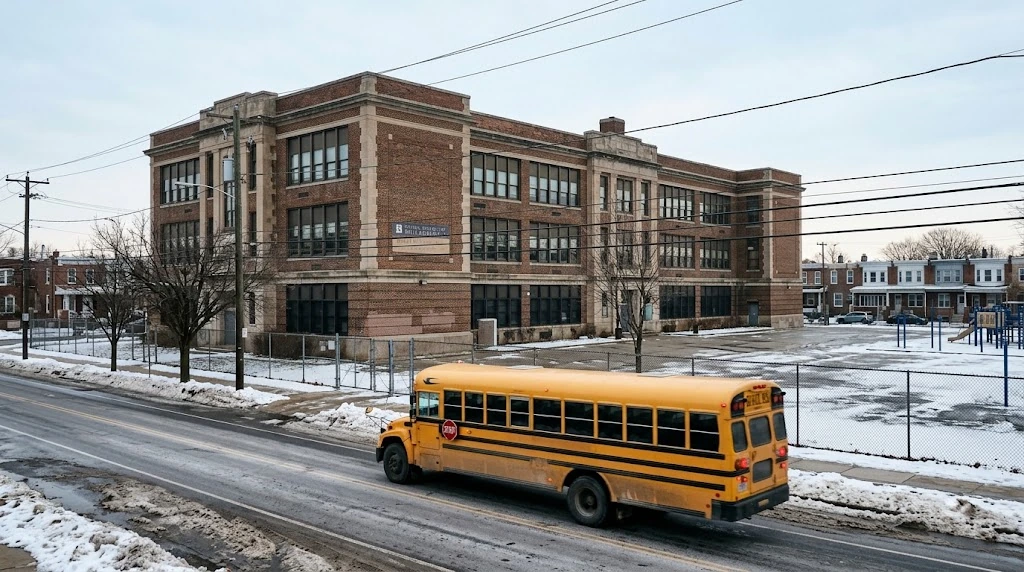
School District of Philadelphia Closure Guide: How Closures, Virtual Days, and Weather Decisions Work
Quick Answer
The School District of Philadelphia does not use a single weather measurement to determine whether schools will close. District leaders consider road and sidewalk conditions, transportation, facilities, weather hazards, and the safety of students and staff before the Superintendent decides whether schools will open normally, close, dismiss early, or operate virtually.
For families checking the schedule for September 21, 2026, there is an important calendar distinction: this date is already listed as Yom Kippur, with schools closed for students and staff on the District's 2026–2027 academic calendar. It is therefore not an inclement-weather closure.
For weather-sensitive days, the District's published inclement-weather process gives families useful clues about timing. Decisions may be reviewed the afternoon or evening before school, or during an early-morning response process when conditions change overnight. The final decision comes from the District, not from a weather app, social-media post, or third-party estimate.
This guide explains the Philadelphia closure process, the Decision Window™, transportation considerations, examples from 2026, and practical steps families can use before an official announcement. For live tomorrow estimations, monitor the School District of Philadelphia Closure Predictor or the Pennsylvania School Closures Hub. It is an informational planning guide, not an official School District of Philadelphia announcement.
What Does “Philadelphia School Closure” Mean?
A Philadelphia school closure can take several forms. A traditional building closure is only one possible response when conditions make normal operations impractical.
Depending on the situation, the District may:
Open schools on the normal schedule
Open while advising families about travel conditions
Delay the start of school
Dismiss students early
Close school buildings
Move District programs to virtual operation
Cancel after-school activities while keeping the school day open
Cancel outdoor activities because of a specific hazard
Modify transportation services
This distinction matters because a headline such as “Philadelphia schools closed” does not necessarily describe every program, transportation route, extracurricular activity, or Early Childhood Center in exactly the same way.
The District's own 2026 announcements demonstrate this range. On January 28, all District schools, Early Childhood Centers, and the Central Office operated virtually because snow and ice had created hazardous travel conditions. On February 24, schools again operated virtually after a winter storm left roads and other travel surfaces hazardous. In March, the District canceled outdoor after-school activities because of a Wind Advisory and Tornado Watch while schools still dismissed students at their regular times.
Families should therefore look for the specific operational status rather than assuming every weather-related decision means a traditional snow day.
Is September 21, 2026 a School Day in Philadelphia?
No. September 21, 2026 is already scheduled as a school closure for Yom Kippur under the District's 2026–2027 academic calendar.
The published calendar lists September 21 as:
Yom Kippur
Schools closed for students
Schools closed for staff
Administrative offices closed
This is a planned academic-calendar closure, not an emergency weather decision.
That distinction is useful when searching for “Philadelphia school district closure” because search results can mix planned holidays, weather closures, professional-development days, virtual-learning days, and individual school announcements.
Families should check the official District calendar before interpreting a date as a weather-related closure.
For a school-level cross-check, individual District school pages can also display the same scheduled closure. The District's William McKinley Elementary page, for example, lists September 21, 2026 as “Yom Kippur Observed – Schools Closed.”
How the School District of Philadelphia Makes Weather Decisions
Philadelphia's published inclement-weather protocol describes a decision process that combines operational information rather than relying on one weather threshold.
The Superintendent makes the final decision after receiving recommendations and information from District leadership. The protocol addresses circumstances including severe winter weather, extreme heat, emergency building conditions, and other events that could affect safe school operations.
Several factors can influence the decision:
Road conditions
Sidewalk and pedestrian conditions
Public transportation and school transportation
Weather severity and timing
Conditions at school buildings
Ability of staff to reach schools safely
Expected conditions during arrival and dismissal
City and emergency-management information
Whether conditions affect the entire District or particular facilities
The operational feasibility of opening safely
The District's January 2026 announcements illustrate this approach. The January 28 virtual day was tied not simply to snowfall totals, but to hazardous travel conditions and continuing effects on roads and commuters. The February 24 virtual day similarly referenced snow-covered or slick roads, sidewalks, parking lots, and school yards.
That means a relatively modest amount of snow can still create an operational problem if temperatures, ice, timing, or road conditions make the morning commute unsafe.
Philadelphia School Closure Decision Window™
The Decision Window™ is the period when families are most likely to see meaningful changes in the information available to them before the official District announcement.
For Philadelphia, the published inclement-weather protocol provides a useful example of how this window can operate.
The District's published process describes both an afternoon/evening review and an early-morning response when overnight conditions require a decision.
| :---: | :---: | :---: | | Decision stage | Published timing | What families should do | | Day-before review | Afternoon/evening | Watch official District channels and prepare for either normal operations or a change | | Early-morning response conference | Around 3:45 a.m. | Check official sources rather than relying on social media | | Superintendent decision | Around 4:00 a.m. | Look for the formal operating status | | Leadership update | Around 4:15 a.m. | Recheck District communication channels | | Confirmation | Around 4:30 a.m. | Confirm the exact status before starting the morning routine | | Communications cascade | Around 4:45 a.m. | Look for District messages, school notices, and transportation information |
These times describe the published protocol, not a promise that every future weather event will follow the same schedule.
A rapidly developing emergency can require a different timeline. A planned early dismissal can also be communicated much earlier.
The practical lesson is simple: the highest-value family planning period is often the evening before through the early morning of the affected school day.
What Families Should Do During the Decision Window™
Instead of repeatedly refreshing social media throughout the night, use a short sequence:
Check the District calendar for planned closures first.
Check the official District announcement page.
Check your child's school communication channel.
Check transportation information if your child uses a District bus.
Check weather and road-condition information.
Use ClariSchool's localized analysis as a planning signal, not as the official decision.
Recheck the official District status before leaving home.
This approach reduces unnecessary checking while keeping the final decision with the authority that actually controls school operations.
💡 Plan Before They Announce: Don't wake up at 5:00 a.m. repeatedly refreshing forums. Search your ZIP code on ClariSchool to review your localized ClariScore™, Early Warning Signals, and historical Decision Window™ for the district you follow.
What Can Cause Philadelphia Schools to Close?
There is no single closure trigger that applies to every event.
Snow and Ice
Winter decisions can depend on more than accumulated snow. Ice, untreated side streets, sidewalks, parking lots, school entrances, and the timing of a storm can materially affect the morning commute.
The District's January 2026 virtual-day announcement specifically referenced snow and ice and continuing hazardous travel conditions.
The February 2026 virtual-day announcement likewise cited slick or covered roads and hazardous conditions affecting drivers and commuters.
For families, this means that road usability can matter as much as snowfall depth.
Freezing Temperatures
Very cold temperatures can create secondary hazards, particularly when combined with ice, wind, exposed sidewalks, or transportation problems.
Cold alone does not automatically mean a closure. The operational question is whether schools and transportation can function safely under the conditions expected during arrival, the school day, and dismissal.
Extreme Heat
Philadelphia also has an established protocol for extreme heat.
The District's published emergency protocol states that, under specified conditions, the Superintendent can decide to dismiss early or offer remote learning when outside temperatures reach the District's stated thresholds.
This is a useful reminder that “school closure” does not only refer to winter weather. Heat, building cooling limitations, and facility conditions can also affect operations.
Severe Wind and Tornado Threats
A severe-weather threat can affect individual activities without closing the entire school day.
On March 16, 2026, the District canceled outdoor after-school activities because of a Wind Advisory and Tornado Watch. Schools still dismissed students at their regular times, and after-care remained open.
This example shows why families should read the exact District announcement rather than infer a full closure from a weather alert.
Building or Facility Problems
A school may also experience an operational problem unrelated to regional weather.
The District's emergency protocol addresses situations involving facilities, cooling, and other building conditions. These cases can result in school-specific communication rather than a District-wide closure.
Philadelphia School Closure Stress-Test Matrix
The following matrix is a planning framework for understanding which signals can matter during a Philadelphia closure decision. It is not an official District scoring system.
| :---: | :---: | :---: | :---: | | Signal | Family impact | Why it matters | Planning response | | Snow accumulation | Moderate to high | Affects travel, sidewalks, parking, and access | Prepare for slower travel | | Road icing | High | Can make otherwise passable roads hazardous | Allow extra travel time and monitor official updates | | Freezing temperatures | Moderate | Can prolong ice and affect outdoor conditions | Check morning conditions | | Heavy rain | Variable | Can affect drainage, visibility, and travel | Monitor local conditions | | Strong wind | Moderate to high | Can affect outdoor activities and transportation | Watch for activity cancellations | | Tornado threat | High | May require immediate safety actions | Follow official emergency instructions | | Extreme heat | Moderate to high | Can affect building conditions and student safety | Watch for schedule or learning-mode changes | | Air quality | Variable | Can affect outdoor activity and sensitive groups | Check EPA AirNow conditions | | Transit disruption | High | Students and staff may struggle to reach schools | Check SEPTA and District notices | | School facility issue | School-specific | A local building may become unsuitable for normal operation | Follow school-specific communication |
This matrix is deliberately broader than a snow-only checklist because Philadelphia's actual operating decisions can involve several hazards at once.
What Recent Philadelphia Decisions Show
Recent District announcements provide concrete examples of how the decision process works.
January 28, 2026: Virtual Operation After Snow and Ice
On January 27, the District announced that all schools and Early Childhood Centers would operate virtually the following day.
The District cited hazardous travel conditions caused by snow and ice and noted the effects on staff commuting from across the region. After-school activities, athletics, and professional-development sessions scheduled for that day were also canceled.
The announcement is useful because it demonstrates that the operational decision considered regional travel conditions, not simply a numerical snowfall total.
January 29, 2026: Return to In-Person Learning
One day later, the District announced that schools and programs would return to normal in-person operation.
The announcement referenced work by District and City officials to clear snow and ice from roads and walkways. It also warned families that individual yellow-bus routes and SEPTA services could experience delays.
This illustrates another important point: a closure decision can change quickly as road and pedestrian conditions improve.
February 24, 2026: Another Virtual School Day
For February 24, the District announced virtual operation after a winter storm left slick or covered roads and hazardous travel conditions.
The District specifically mentioned roads, side streets, sidewalks, parking lots, and school yards.
That language reinforces the importance of the full travel environment. A school can have a functioning building while the route to that building remains unsuitable for a normal school day.
March 16, 2026: Outdoor Activity Cancellation Without a School Closure
On March 16, the District canceled outdoor after-school activities because of a Wind Advisory and Tornado Watch.
The regular school dismissal schedule remained in place.
For parents, this is a strong example of why the phrase “weather cancellation” should not automatically be interpreted as “school closed.”
Transportation: What Philadelphia Families Should Watch
Transportation can become one of the most practical factors in a closure decision.
When schools operate normally after a winter event, bus service may continue while individual routes experience delays. The District's January 29, 2026 announcement specifically advised families to expect possible delays on yellow-bus routes and SEPTA subway, trolley, and bus routes.
When the District is fully closed, transportation services may be suspended with the school closure.
When there is a delay or early dismissal, transportation may operate on a modified schedule.
Families should therefore check:
District operating status
School-specific notices
Yellow-bus information
SEPTA service information
Local road conditions
Sidewalk and walking-route conditions
A child who normally walks may face a different practical situation from a child who relies on a bus or public transit.
For transportation-sensitive families, the most useful planning question is often not simply “Will school close?” but “Can my child safely complete the entire trip to and from school?”
Official Weather and Environmental Signals
ClariSchool's analytical framework can use multiple external signals to help families understand changing conditions. These signals should be treated as context rather than as a replacement for the District's decision.
National Weather Service and NOAA
The National Weather Service (NWS) provides official weather observations, warnings, watches, and related meteorological information.
For Philadelphia, families can use NWS information to understand the broader hazard picture, including winter weather, high winds, severe thunderstorms, tornado threats, and temperature extremes.
A weather warning does not automatically mean Philadelphia schools will close. The District still has to evaluate local operational conditions.
EPA AirNow
Air quality can also matter during smoke or pollution events.
EPA's AirNow system provides the U.S. Air Quality Index and current local air-quality information. The AQI communicates the potential health implications of pollutants such as ozone and particle pollution.
For families, AirNow is especially useful when outdoor conditions may affect recess, athletics, after-school activities, or children who are sensitive to air pollution.
Municipal and Pennsylvania Department of Transportation Information
Road conditions are another independent signal.
Pennsylvania Department of Transportation transportation information, including Pennsylvania 511 resources, can help families assess roadway conditions and travel disruptions across the region.
These transportation signals are particularly relevant during freezing rain, ice, heavy snow, flooding, and other events where the condition of the route can change faster than the weather description alone suggests.
Historical District Decision Logs
Historical decisions provide another useful layer.
ClariSchool's methodology examines 10+ years of historical school board and district decision logs to understand how a district has responded to different operational conditions over time.
Historical behavior does not determine what officials will decide on a future date. Its value is that it provides context around how a district has handled similar combinations of weather, transportation, and operational conditions.
How ClariScore™ Fits Into Philadelphia School Closure Planning
ClariScore™ is ClariSchool's localized analytical signal for school disruption planning.
It is designed to combine multiple inputs instead of asking families to rely on one weather variable.
For Philadelphia, relevant inputs can include:
Localized weather conditions
Snow and ice exposure
Road and transportation conditions
District operating behavior
Historical district decision patterns
Timing of the event
Environmental conditions
Official signals already issued by public agencies
The output should be treated as an Estimated Disruption Risk, not as an official school decision.
The distinction matters.
A high analytical signal does not close a Philadelphia school. A low analytical signal does not keep a school open. The District remains the authority responsible for its operating status.
ClariSchool is most useful when it helps families answer a planning question such as:
“Should I prepare tonight for a possible schedule change?”
That is different from asking:
“Has the District officially closed?”
The first is a family-planning question. The second requires an official District announcement.
Decision Window™: When to Pay Attention
The Decision Window™ is most useful when a family needs to know when to shift from casual monitoring to active preparation.
A practical Philadelphia routine can look like this:
| :---: | :---: | :---: | | Period | What to monitor | Family action | | 24+ hours before | Weather, District calendar, school notices | Identify backup plans | | Evening before | District signals, road conditions, ClariSchool analysis | Prepare clothes, meals, childcare, and transportation alternatives | | Early morning | Official District status | Confirm whether the normal routine applies | | Before departure | School and transportation updates | Recheck routes and timing | | During the day | District updates | Watch for early dismissal or activity changes |
The point is not to watch continuously.
It is to know when the information is most likely to become operationally useful.
A Practical Philadelphia School Closure Checklist
Use this checklist when weather or another emergency could affect the school schedule.
Check the official Philadelphia school calendar for planned holidays and professional-development days.
Check the School District of Philadelphia's official announcement channels.
Check your child's individual school page or communication system.
Check ClariSchool for a localized ClariScore™ and Early Warning Signals.
Check road conditions before assuming a normal commute.
Check SEPTA or school-bus information if transportation is involved.
Prepare an alternate childcare plan if needed.
Charge phones and school devices.
Keep school contact information available.
If schools move to virtual operation, confirm the learning instructions provided by the District or school.
If activities are canceled but school remains open, follow the exact activity notice.
Recheck the official District status before leaving home.
The checklist is intentionally simple. During a weather event, families benefit more from a reliable sequence than from dozens of separate information sources.
💡 Plan Before They Announce: Use the Philadelphia school district tracker to monitor localized signals, the Snow Day Predictor for a broader multi-hazard analysis, and ClariSchool pricing and alerts if you want additional family planning features and alerts.
How to Prepare for a Virtual School Day
A virtual day is not necessarily the same as a traditional snow day.
Recent Philadelphia announcements show that the District can move schools and offices to virtual operation when travel conditions are hazardous.
Families should therefore prepare for two different scenarios:
Scenario 1: Traditional Closure
The school building is closed and students do not attend in person.
The District or school provides the relevant instructions for the day.
Scenario 2: Virtual Operation
Students remain home, but instructional activities continue remotely.
Families may need:
A charged Chromebook or other approved device
Reliable internet access
A quiet workspace
Updated contact information
Knowledge of the school's communication platform
Awareness of attendance or assignment expectations
The District's January and February 2026 announcements demonstrate that virtual operation can be used as a response to hazardous travel conditions.
Parents should therefore read the exact announcement rather than assume “virtual” means “no schoolwork.”
Planned Closures Versus Emergency Closures
One of the easiest ways to reduce confusion is to separate calendar closures from emergency closures.
Planned Closure
Examples include:
- Key Factors & Criteria: Yom Kippur, Labor Day;Indigenous Peoples' Day
Staff professional-development days
Scheduled recess periods
These dates are known in advance and appear on the academic calendar.
Emergency or Weather-Related Closure
These occur because conditions create an operational or safety issue that was not simply part of the normal academic calendar.
Examples can include:
- Key Factors & Criteria: Snow and ice, Extreme heat, Severe wind, Tornado threats;Hazardous air quality
Building emergencies
Major transportation disruptions
The distinction is especially useful for searches such as “Is Philadelphia school closed today?” A date may already be a scheduled holiday even if weather conditions are also being discussed.
How to Verify a Philadelphia School Closure
A reliable verification process should have three layers.
Layer 1: District Status
Start with the School District of Philadelphia's official communication.
This is the authoritative source for District-wide operating decisions.
Layer 2: School-Specific Information
Some schools may communicate additional details about arrival procedures, activities, meals, transportation, or facility-specific issues.
A District-wide message should be read together with any relevant school-specific communication.
Layer 3: Family Planning Signals
Use weather services, transportation information, and ClariSchool's analytical tools to understand what may be developing and prepare accordingly.
These tools can help with planning, but they do not replace an official closure announcement.
Philadelphia School Closure FAQ
Is the School District of Philadelphia closed today?
The answer depends on the specific date and operating status. For September 21, 2026, the District's published 2026–2027 calendar lists Yom Kippur as a school closure for students and staff. That is a planned calendar closure rather than a weather-related decision.
For any other date, check the District's latest official announcement before relying on a third-party status.
What time does Philadelphia usually announce a school closure?
The District's published inclement-weather protocol describes an early-morning decision process that includes a conference around 3:45 a.m., a Superintendent decision around 4:00 a.m., confirmation around 4:30 a.m., and a communications cascade around 4:45 a.m.
Those times describe the published protocol and should not be treated as a guaranteed announcement schedule for every emergency.
Can Philadelphia schools switch to virtual learning instead of closing?
Yes. The District has used virtual operation during weather-related events. On January 28 and February 24, 2026, District schools and Early Childhood Centers operated virtually because hazardous travel conditions affected the region.
Does snow automatically close Philadelphia schools?
No. Snow depth alone does not determine the decision.
Road icing, sidewalks, transportation, timing, school facilities, temperatures, and other operational factors can all matter.
Does Philadelphia close schools for extreme heat?
The District has an extreme-heat protocol that allows for early dismissal or remote learning under specified conditions.
The exact response depends on the circumstances and the Superintendent's decision.
Does a weather warning automatically mean schools are closed?
No.
A National Weather Service warning describes a weather hazard. The School District of Philadelphia separately decides how that hazard affects school operations.
Can after-school activities be canceled while school remains open?
Yes.
On March 16, 2026, the District canceled outdoor after-school activities because of a Wind Advisory and Tornado Watch while schools still dismissed students at their normal times.
Will school buses run if Philadelphia schools are delayed?
Transportation can operate under modified schedules during a delay or early dismissal. Families should check the District's specific transportation instructions for the affected day.
What happens to SEPTA when Philadelphia schools close?
SEPTA operates independently of the School District. A school closure does not mean SEPTA services automatically stop.
Families who use public transportation should check SEPTA's current service information separately.
Is September 21, 2026 a snow day in Philadelphia?
No. September 21, 2026 is scheduled as Yom Kippur on the District's 2026–2027 academic calendar.
What is ClariScore™?
ClariScore™ is ClariSchool's localized analytical signal for disruption planning. It combines multiple contextual inputs to help families understand changing conditions around a school district.
It is not an official District status.
What is the Decision Window™?
The Decision Window™ describes the period when families should pay closer attention to changing conditions and prepare for a possible schedule change.
For Philadelphia weather events, this can include the afternoon or evening before school through the early morning of the affected day.
Can ClariSchool tell me whether Philadelphia schools will close?
ClariSchool can provide analytical estimates, historical context, and early warning signals for family planning. The official closure or operating decision remains with the School District of Philadelphia.
Where should I check the official Philadelphia school calendar?
Use the School District of Philadelphia's official academic calendar. The 2026–2027 calendar identifies scheduled holidays, professional-development days, instructional periods, and other dates affecting the school year.
What should I do if social media says Philadelphia schools are closed?
Verify the information through the District's official communication channels before changing your family's plans.
Social-media posts can be delayed, incomplete, or based on an announcement for a different district.
Methodology & Data Verification
ClariSchool's family-planning methodology is designed around multiple independent information streams rather than a single weather variable.
The framework can incorporate:
National Weather Service (NWS) weather observations, watches, warnings, and hazard information
NOAA meteorological data
EPA AirNow atmospheric and air-quality indices
Municipal and Pennsylvania Department of Transportation (DOT) road and icing information
Transit and transportation conditions
10+ years of historical school board and district decision logs
District-specific operational behavior
Localized timing and hazard conditions
Official school and district announcements
The historical component helps establish context around how a district has handled previous operational disruptions. The public-agency component helps identify changing conditions. The District's own announcements remain the final source for actual school status.
This layered approach is especially relevant in Philadelphia because the practical effect of a weather event can differ between neighborhoods, transportation modes, and school facilities.
Data Verification Principles
ClariSchool's analytical outputs should be interpreted using four basic rules:
Current official status beats historical behavior.
Local conditions matter more than a citywide headline.
Transportation conditions are part of family planning.
An analytical estimate is not an official school closure.
These rules keep the technology in its proper role: helping families prepare while leaving public operating decisions to public authorities.
Philadelphia School District Guide for Families
Families who regularly monitor Philadelphia school schedules may also benefit from keeping a small reference set available:
The official District academic calendar
The District's inclement-weather and emergency protocol
The District news and announcement page
The child's individual school website
SEPTA service information
NWS weather information
EPA AirNow air-quality information
ClariSchool's Philadelphia district tracker
A small, consistent information set is usually easier to manage than checking dozens of social-media accounts.
The goal is not to eliminate uncertainty. Weather and emergency conditions can change.
The goal is to make the uncertainty easier to manage.
What Parents Should Do the Night Before
When conditions are deteriorating, the most useful preparation often happens before an announcement is made.
A simple evening routine can include:
Check whether the next day is already a scheduled District closure.
Review the latest weather hazards.
Check road and transit conditions.
Review ClariSchool's localized signals.
Prepare for either normal school or a schedule change.
Charge devices.
Confirm childcare backup arrangements.
Keep transportation alternatives available.
Check official District communication before bedtime.
Recheck the official status in the morning.
This approach prevents a common problem: treating the official announcement as the first moment when preparation can begin.
Families can prepare without assuming the outcome.
That is the purpose of the Decision Window™.
Key Takeaway
Philadelphia school closure decisions are based on operational safety, not one weather number.
The School District of Philadelphia considers weather, roads, transportation, facilities, and other local conditions before the Superintendent determines whether schools will open normally, operate virtually, close, dismiss early, or modify activities.
Recent 2026 decisions show that the District can use different responses for different hazards: virtual operation during hazardous winter travel, a return to in-person learning as roads improve, or cancellation of outdoor activities during severe wind and tornado threats while the regular school day continues.
For families, the most practical strategy is to separate three things:
What the District has officially decided
What conditions are developing
What your family needs to prepare
ClariSchool is designed to help with the third and provide context for the second. The official District communication determines the first.
For Philadelphia families, that means using the Decision Window™ to prepare early, monitoring Early Warning Signals, and checking the official District status before making the final morning decision.
💡 Plan Before They Announce: Use ClariSchool's Philadelphia school district tracker to monitor localized conditions and your district's historical Decision Window™. For broader multi-hazard planning, use the Snow Day Predictor, and review ClariSchool pricing and alerts for additional family planning features.
Disclaimer: ClariSchool provides analytical estimations and disruption risk modeling for family planning purposes. Official school closure decisions are made independently by local school superintendents and board authorities. Always confirm final announcements via your official school district communication channels.