
HISD School Closure for Weather: Decision Window and Parent Guide
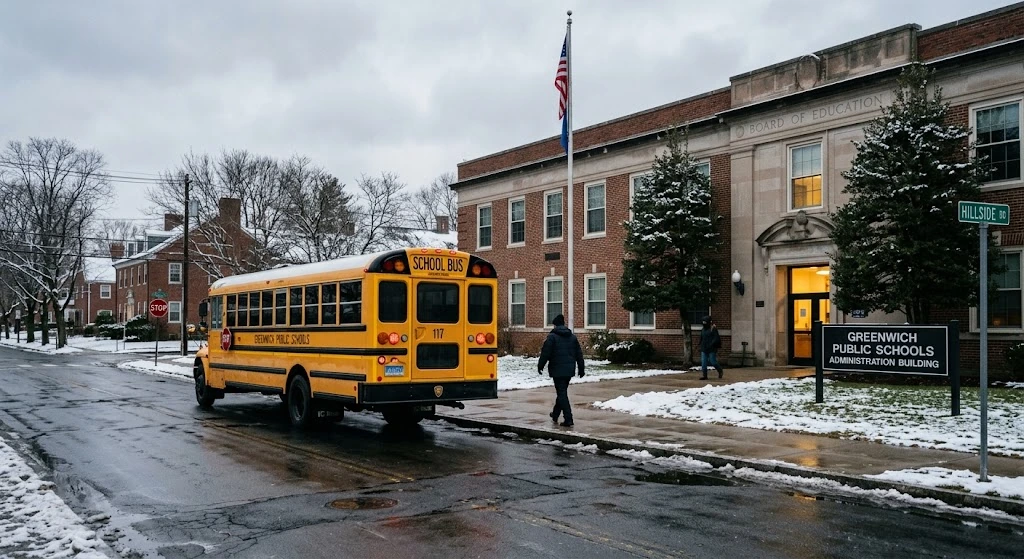
HISD Weather School Closures: Decision Windows, Delays, and Family Planning
Quick Answer
HISD weather decisions are shaped by road safety, transportation, storm timing, campus conditions, and the quality of incoming information, so families should treat the hours before an official announcement as a planning window rather than wait for one weather number to determine the outcome.
For most families, the practical sequence is:
Watch for an Early Warning Signal from an authoritative weather or emergency source.
Monitor Disruption Likelihood as the timing and geographic scope of the hazard become clearer.
Check HISD's official communication channels for the actual operating decision.
Use the Decision Window™ to arrange childcare, transportation, work coverage, and morning logistics.
Treat a full closure, delayed opening, early dismissal, and normal operation as separate decisions.
HISD identifies ParentSquare as its primary platform for communication between the district, campuses, and families, and specifically lists weather-related closings and delays among the information it distributes.
For district-specific predictions, visit the Houston ISD School Closure Predictor or the Texas School Closures Hub. Families who want an additional planning tool can also review the Snow Day Predictor and the ClariSchool Pricing & Alert Hub.
The important distinction is simple: a weather alert is not the same thing as a school closure announcement. The alert describes a hazard. HISD determines school operations.
How the HISD Decision Window™ Works
The most useful family-planning period begins when an Early Warning Signal appears and ends when HISD communicates its operating status, because transportation, road conditions, and campus readiness can change during that interval.
A school closure is an operational decision, not simply a weather measurement.
District leaders have to consider several variables simultaneously:
The type of hazard.
Its expected timing relative to school arrival and dismissal.
The geographic area affected.
Major-road accessibility.
Bus-route accessibility.
Campus conditions.
Staff access.
Power and building systems.
Emergency-management information.
The amount of time families need to react.
The reliability and freshness of available information.
That produces what ClariSchool calls the Decision Window™.
The term describes the period in which a family has enough information to begin contingency planning but may not yet have the final district operating decision.
That distinction is valuable because families often face two different questions:
"How disruptive could tomorrow morning become?"
and
"Has HISD officially closed school?"
Those questions can have different answers at the same time.
A practical timing model
For many districts, weather-related operating decisions become especially consequential during the evening before school and the early-morning travel period, although HISD does not publish one universal closure deadline for every weather event.
A useful planning model looks like this:
| :---: | :---: | :---: | | Planning period | What families may know | What families can do | | Previous afternoon | Early Warning Signal appears | Begin monitoring and identify Plan B | | Early evening | Disruption Likelihood may become clearer | Review childcare and transportation options | | Late evening | Event timing and geographic exposure become more defined | Prepare for either normal operation or disruption | | Overnight | New observations can materially change conditions | Keep official alerts accessible | | Early morning | Road and transportation conditions become highly relevant | Check the latest HISD message before departure | | School-day start | Official operating status is actionable | Follow HISD's closure, delay, or normal-operation instructions |
These periods are a planning framework, not an HISD rule.
Families should not interpret a particular clock time as an official deadline. A tropical system, flash-flood threat, severe thunderstorm, extreme-heat event, or another hazard can produce a different timeline.
The useful idea is the window itself.
The earlier part is about preparation.
The later part is about verification.
The Superintendent's Dilemma
The most difficult part of a weather operating decision is often the final few hours, when fresh road information becomes more useful while every additional minute of waiting leaves families less time to adjust.
A superintendent and district operations team face competing priorities.
Announcing too early can create unnecessary disruption if conditions change substantially.
Announcing too late can leave families, employees, transportation teams, and campus staff with little time to adjust.
Neither side of that tradeoff is solved by looking at a single weather measurement.
The 4:00 AM road-inspection problem
Early-morning road observations can reveal localized hazards that broad regional weather information cannot fully describe, especially when flooding, debris, visibility, or standing water affects transportation corridors.
Imagine two routes serving the same school.
Route A uses a major roadway with adequate drainage and remains passable.
Route B includes a low-lying section that becomes flooded during heavy rainfall.
The regional weather information may be identical for both routes.
The operational exposure is not.
That matters for a district as large as HISD.
HISD reports 168,000+ students and 264 campuses, creating a large and geographically distributed transportation and campus network.
A decision affecting such a system has to account for more than what is happening at one intersection or one neighborhood.
Why the final hours matter
A road condition that is acceptable several hours before student arrival can become a meaningful transportation constraint closer to the morning commute, making recent observations an important part of the operating picture.
This is especially relevant for:
Urban flooding.
Downed trees.
Standing water.
Road closures.
Severe thunderstorm debris.
Visibility problems.
Power interruptions.
Localized hazards around school entrances.
Conditions affecting bus staging areas.
The district does not need a citywide disaster for school transportation to become complicated.
A relatively small number of strategically important transportation corridors can affect a much larger network.
Information lag and decision pressure
New information generally becomes more specific as an event approaches, but waiting for additional evidence also compresses the time available for families to respond.
That creates a natural tension.
At 3:00 PM, families may have plenty of time but less certainty.
At 10:00 PM, there may be better information and a clearer picture.
At 5:00 AM, road observations may be highly relevant, but families have much less time to arrange childcare or transportation.
This is why the ClariSchool framework emphasizes Decision Window™ rather than a single announcement time.
The objective is not to guess the district's decision.
The objective is to make the family less dependent on the last five minutes.
What HISD's Communication System Means for Families
HISD says ParentSquare is the primary communication platform for HISD and its campuses and specifically lists weather-related closings and delays among the messages it can deliver.
For families, this means communication readiness is part of weather preparation.
HISD states that ParentSquare is replacing platforms such as SchoolMessenger and ClassDojo during the district's transition.
Families should therefore make sure:
ParentSquare is installed or accessible.
Their phone number is current.
Their email address is current.
Their child's campus is correctly associated with their account.
Notifications are enabled.
Important messages are not being filtered into an overlooked folder.
Another caregiver can access the same essential information when necessary.
The official HISD website also provides district information and currently displays the district calendar and ParentSquare resources.
For an official operating decision, the district's current communication should take priority over:
Group-chat rumors.
Unverified social-media posts.
Old screenshots.
Messages from another Houston-area district.
General weather alerts.
Posts that do not identify a current date.
Why communication timing matters
A closure message has practical value only when families receive, understand, and act on it, so reliable notification access is part of the family's disruption plan.
Consider a parent who knows that a major weather event is affecting Houston but has not checked ParentSquare.
They may have accurate information about the weather and still lack the information needed to answer:
Is school open?
Is the start time delayed?
Is transportation operating?
Is dismissal changing?
Are extracurricular activities affected?
Does the campus have additional instructions?
Those are school-operating questions.
HISD's communication system exists to answer them.
HISD's Scale Changes the Decision
A district with 264 campuses and more than 168,000 students must evaluate weather impacts across a large operational network rather than rely on conditions at one location.
Scale changes the nature of the problem.
Suppose a weather event produces:
Clear conditions around some campuses.
Heavy rainfall around others.
Flooding near selected transportation corridors.
Significant wind in another part of the district.
The district still has to communicate a coherent operating status to families and staff.
That does not mean every neighborhood experiences identical conditions.
It means the district has to balance local conditions against system-wide operations.
Why one weather number is insufficient
A rainfall total, wind measurement, temperature, or storm classification can describe one dimension of the hazard but cannot by itself determine whether the HISD school-day transportation system can operate safely.
For example, two rainfall events with the same total accumulation can have different operational effects.
If rain falls gradually, drainage may keep pace.
If the same total arrives in a short period, streets and low-lying areas can experience very different conditions.
Timing matters.
Location matters.
Drainage matters.
Road design matters.
Transportation routes matter.
That is why Disruption Likelihood is broader than a single weather reading.
Urban vs. Rural District Decision Patterns
Urban districts often face dense transportation networks and localized infrastructure constraints, while rural districts may face longer routes and fewer alternate roads, so the same hazard can create different operational pressures.
| :---: | :---: | :---: | :---: | | Factor | Large urban district | Rural district | Operational implication | | Student population | Often large | Often smaller | More students can increase coordination demands | | Bus network | Dense and interconnected | Longer routes | Different route-failure points | | Road alternatives | Often several | Sometimes limited | One blocked road can have different consequences | | Geographic pattern | Multiple neighborhoods | Broad territory | Hazard distribution may be uneven | | Flood exposure | Localized urban corridors | Bridges, low roads, rural routes | Access constraints differ | | Commute density | High | Lower | Congestion can amplify road disruptions | | Communication scale | Large family population | Smaller population | Notification logistics differ |
This is a structural comparison, not a ranking.
A rural district can face a difficult closure decision even with fewer students because a single bridge, mountain pass, or isolated road can serve a large share of the student population.
An urban district can face the opposite problem: multiple routes may exist, but the number of simultaneous trips is much larger.
Why HISD needs its own context
HISD's size and urban setting make transportation access, localized flooding, major-road conditions, and campus-by-campus impacts particularly relevant to family planning.
Families should therefore avoid copying another district's closure pattern and applying it directly to HISD.
A district in Colorado may focus heavily on snow and ice.
A Gulf Coast district may place greater operational emphasis on flooding, tropical weather, wind, heat, and road accessibility.
A northern urban district may have a mature snow-removal system that changes its operating calculus.
The local transportation network matters as much as the hazard label.
The Weather Metrics That Actually Matter
Useful weather-risk analysis combines intensity, timing, location, duration, and transportation impact rather than treating any single measurement as an automatic school-closure trigger.
The National Weather Service uses specific criteria for severe-weather warnings.
For example, NWS guidance identifies a Severe Thunderstorm Warning threshold that includes wind gusts of 58 mph or greater and/or hail at least 1 inch in diameter, along with tornado-related criteria in the relevant warning framework.
Those are NWS warning criteria.
They are not HISD closure thresholds.
That distinction should remain explicit.
Thunderstorm intensity
A 58-mph wind-gust threshold or 1-inch hail threshold can indicate a severe thunderstorm warning, but the warning itself does not announce an HISD operating decision.
For families, the important question is what the hazard means for the actual trip:
Is the warning area along the school route?
Does it overlap arrival time?
Are major roads affected?
Are buses exposed?
Are outdoor activities affected?
Is the hazard moving away or toward the transportation window?
The warning provides hazard information.
HISD provides the school status.
Flooding
Flood depth becomes a direct transportation-safety concern at surprisingly low levels, and NWS guidance says even 6 inches of fast-moving floodwater can knock an adult down.
NWS's Turn Around, Don't Drown guidance states:
6 inches of fast-moving water can knock over an adult.
12 inches of rushing water can carry away most cars.
2 feet of rushing water can carry away SUVs and trucks.
NWS also states that people should never drive or walk into floodwater and should not bypass barriers blocking flooded roads.
These numbers are useful because they put road risk into concrete terms.
They do not tell a family whether HISD is closed.
They tell a driver when a road may be unsafe regardless of the school status.
Heat
Extreme heat can affect school-day safety even without a traditional storm, and EPA guidance emphasizes that children need additional protection from heat exposure and dehydration.
For school families, heat can affect:
Athletic practices.
Outdoor physical education.
Recess.
Walking routes.
Bus stops.
Dismissal.
Playground activities.
Hydration needs.
EPA notes that children can become dehydrated more quickly than adults and recommends measures such as hydration, reducing direct heat exposure, and moving outdoor activities to cooler periods or indoors when appropriate.
Again, heat-risk information is not an HISD closure announcement.
It is an input into family safety planning.
First-Party Stress-Test Benchmark Matrix
The benchmark matrix below uses measurable NWS, EPA, and HISD facts to distinguish hazard intensity from the separate question of school operations.
| :---: | :---: | :---: | :---: | | Stress factor | Measured benchmark | What it tells families | Authority | | Severe thunderstorm wind | ≥58 mph | Severe-thunderstorm warning criterion | NWS | | Severe thunderstorm hail | ≥1 inch | Severe-thunderstorm warning criterion | NWS | | Fast-moving floodwater | 6 inches | Can knock down an adult | NWS | | Rushing floodwater | 12 inches | Can carry away most cars | NWS | | Rushing floodwater | 2 feet | Can carry away SUVs and trucks | NWS | | HISD campuses | 264 | Large operating footprint | HISD | | HISD students | 168,000+ | Large family and transportation network | HISD | | Extreme heat | Children require additional precautions | Hydration and exposure management matter | EPA |
The matrix is a stress-test reference, not an HISD mathematical closure formula.
No public HISD source reviewed for this article establishes a formula such as:
"X mph + Y inches of rain = school closure."
That is precisely why families should not convert weather measurements directly into an assumed school status.
Decision Window™ Spotlight: How ClariSchool Fits In
ClariSchool's Decision Window™ framework is designed to help families organize early signals, Disruption Likelihood, and historical timing into a practical preparation sequence without presenting a planning score as an official district decision.
The distinction between planning and verification is central.
ClariSchool can help answer:
"When should I start preparing?"
HISD answers:
"What is the official school operating status?"
Those are complementary questions.
Early Warning Signal
An Early Warning Signal is an observable development that justifies closer attention before a final school operating decision exists.
Examples include:
An NWS warning affecting the relevant area.
A developing flood threat.
Rapidly deteriorating road access.
A major transportation disruption.
A significant emergency-management update.
A severe-weather system approaching the school-day travel period.
An Early Warning Signal does not mean school is closed.
It means the family should stop treating the next school day as entirely routine.
Disruption Likelihood
Disruption Likelihood describes how strongly multiple available signals point toward meaningful interference with normal school-day logistics.
It can be evaluated through questions such as:
Is the hazard close to the school or travel area?
Does its timing overlap arrival or dismissal?
Are transportation corridors affected?
Are conditions worsening or stabilizing?
Does the event affect a large portion of the district?
Are there campus-specific instructions?
Is there a credible emergency-management response?
This framework helps prevent a common mistake: treating every weather alert as equally relevant to school operations.
Estimated Disruption Risk
Estimated Disruption Risk is a planning concept that summarizes the potential effect on the school-day routine without representing itself as an official HISD operating status.
A family might use it to decide:
Whether to call a backup caregiver.
Whether to move a work meeting.
Whether to charge devices.
Whether to prepare transportation alternatives.
Whether to review the campus message.
Whether to expect a decision during the overnight period.
The purpose is preparation.
Not certainty.
ClariScore™
ClariScore™ is ClariSchool's planning score for summarizing disruption signals in a simpler family-facing format.
It should be understood as decision support rather than an HISD classification.
ClariScore™ does not issue:
HISD closures.
HISD delays.
HISD early dismissals.
NWS warnings.
Emergency-management orders.
Families can explore the district workflow through the HISD School Closure Guide or review the broader Snow Day Predictor.
For access to ClariSchool's available planning features, see the ClariSchool Pricing & Alert Hub.
💡 Plan Before They Announce: Don't wake up at 5:00 AM repeatedly refreshing forums. Search your 5-digit ZIP code on ClariSchool to calculate your localized ClariScore™ and track your district's historical Decision Window™.
When a Delay Makes More Sense Than a Full Closure
A delayed opening and a full closure address different operational problems, with a delay preserving part of the school day when the primary constraint is concentrated around the morning travel period.
Families should read the exact wording of an HISD announcement rather than assume that "school changed" means "school closed."
A delayed opening can mean:
Students report later.
Bus service operates on a modified schedule.
Morning activities change.
Staff reporting times change.
The district expects conditions to become more manageable later.
A full closure means the normal school-day operation does not take place.
An early dismissal is different again.
Why the distinction matters
A family needs different logistics for a two-hour delay, a full closure, and an early dismissal because transportation and childcare requirements occur at different times.
For example:
| :---: | :---: | :---: | | Status | Primary family question | Planning response | | Normal operation | What is the normal route? | Follow ordinary schedule | | Delayed opening | When does my child need to leave? | Rebuild morning timing | | Full closure | Who supervises the child? | Activate full-day Plan B | | Early dismissal | Who receives the child? | Confirm pickup and transportation | | Campus-specific change | Does this apply to my school? | Follow campus instructions |
The actual HISD message controls.
ClariSchool's role is to help families prepare around the information window.
What Families Can Do Before the Official Decision
The best use of an uncertain planning period is to prepare two practical schedules rather than repeatedly checking social media for an answer that only HISD can officially provide.
Plan A: Normal school day
Write down your ordinary:
Departure time.
Bus or carpool arrangement.
Work commute.
Breakfast routine.
After-school care.
Sports and extracurricular schedule.
Pickup responsibility.
Plan B: Weather-disruption day
Write down:
Who can supervise your child.
Who can provide transportation.
What happens if school starts late.
What happens if school closes.
What happens if dismissal changes.
Which work responsibilities require advance notice.
Which activities can be canceled quickly.
Which caregiver has access to ParentSquare.
This takes only a few minutes and can eliminate a much larger amount of morning stress.
Keep the information chain short
A short information chain reduces the chance that an old message or unrelated district announcement becomes the basis for a family decision.
A practical hierarchy is:
HISD official communication.
Your child's HISD campus communication.
ParentSquare.
Current NWS alerts and emergency information.
Reputable local reporting for context.
Social media only as a lead to something that can be verified.
The final school-status decision belongs to HISD.
Why Families Should Not Copy Another District's Timing
Closure timing from another school district may illustrate a planning pattern but cannot be treated as an HISD operating rule because district geography, transportation, staffing, infrastructure, and communication procedures differ.
This matters particularly in large metropolitan areas.
A district with 25 campuses may be able to evaluate a small number of transportation corridors quickly.
A district with hundreds of campuses has a different coordination problem.
Likewise, a rural district may have fewer students but longer bus routes and fewer alternate roads.
Historical data is useful when it is used correctly.
The relevant question is not:
"Did another district close at 8 PM?"
The better question is:
"What conditions tend to narrow the local Decision Window™, and how much preparation time remains?"
District Historical Variations
Historical closure analysis becomes more useful when it measures timing, hazard type, transportation conditions, and local geography rather than simply counting how many closure days occurred.
A district's past operating decisions can help establish a context for family planning.
However, historical patterns do not override the current official message.
Urban example: New York City and Chicago
Large urban systems such as New York City and Chicago illustrate the scale of coordination involved in weather-related operations, but their historical practices should not be treated as HISD rules.
New York City operates an enormous school system across a dense metropolitan transportation network.
Chicago Public Schools likewise operates in a large urban environment where winter conditions, transportation, staffing, and building operations interact.
Those examples are useful for understanding why urban school closure decisions can involve:
Public transit.
Road congestion.
Large student populations.
Many campuses.
Different neighborhood conditions.
Multiple transportation modes.
They are not direct templates for Houston.
Rural district comparison
A rural district can face a different Decision Window™ because fewer alternate roads, longer bus routes, and isolated communities can make a single transportation obstacle more consequential.
For a rural district, the question might be:
Can the bus complete a 45-minute route safely?
For a large urban district, the question might be:
Can thousands of routes, roads, campuses, and family travel patterns operate safely at the same time?
The hazard can be similar.
The operational problem is not.
Why local history matters
Local historical timing is most useful when it tells families when meaningful decisions have tended to occur, not when it is treated as a promise about the next event.
That is the practical role of the Decision Window™ concept.
Historical information can help answer:
How much notice have families received in comparable situations?
Are decisions commonly made the evening before or closer to arrival time?
Does the district tend to use delays as well as closures?
Which hazard types have historically affected operations?
How often do campus-specific communications supplement district notices?
Those questions provide more useful context than a simple list of closure dates.
Safety Comes Before the School Status
An open-school message does not make an unsafe road safe, and NWS guidance explicitly says never to drive or walk into floodwater.
This is especially important during Houston-area flooding.
NWS explains that floodwater can hide road damage and that people should never drive around barriers placed at flooded roads.
Families should therefore distinguish between two separate decisions:
School status: What does HISD say?
Travel safety: Can I safely make this trip?
The first comes from the district.
The second requires attention to actual conditions and official safety instructions.
Heat safety is part of the equation
Extreme heat can affect children even when school remains open, and EPA guidance recommends hydration and reducing direct exposure during dangerous heat conditions.
Parents may need to consider:
Water availability.
Outdoor activity schedules.
Athletic practice conditions.
Bus-stop exposure.
Walking distance.
Cooling access.
Symptoms of heat illness.
EPA identifies dehydration, heat exhaustion, and heat stroke as important concerns for children during extreme heat and recommends practical preventive measures.
The same principle applies to other hazards.
The school status is one part of the family's safety picture.
A Practical HISD Weather-Closure Workflow
A repeatable workflow reduces uncertainty by separating hazard monitoring, family preparation, official verification, and travel safety into four distinct stages.
Stage 1: Detect
Look for an Early Warning Signal.
Examples:
NWS warning.
Flood-related information.
Severe thunderstorm information.
Emergency-management notice.
Significant transportation disruption.
Do not translate that signal directly into "school is closed."
Stage 2: Prepare
Assess your Disruption Likelihood.
Ask:
Is the event near my child's route?
Does the timing overlap arrival?
Is transportation likely to be affected?
Do I need childcare?
Do I need to change a work schedule?
Does my child have an athletic or extracurricular commitment?
If the answers indicate meaningful disruption, activate Plan B.
Stage 3: Verify
Check:
ParentSquare.
HISD's official website.
Your child's campus communication.
Any transportation-specific message.
Look for the actual operating status.
Stage 4: Act
Follow the district's instructions.
If the school is closed, use Plan B.
If there is a delay, follow the revised schedule.
If school remains open but travel conditions are dangerous, follow applicable public-safety guidance and never enter flooded roads.
Five-Minute HISD Closure Checklist
A complete status check can be reduced to a short sequence: verify the calendar, check official communications, identify the operating status, confirm transportation, and assess the safety of the actual trip.
Check the HISD district calendar.
Check ParentSquare for a current message.
Check the official HISD website.
Check your child's campus communication.
Identify whether the message says closure, delay, early dismissal, or normal operation.
Check transportation instructions.
Review current NWS alerts affecting your route.
Confirm your Plan B caregiver if disruption is possible.
Recheck official communications before departure.
Do not drive through flooded roads.
Do not bypass barricades.
Save important HISD and campus contacts for future events.
HISD Weather Closure FAQ
What time do school districts usually make weather decisions?
There is no universal national closure hour, and HISD does not publish one fixed deadline that applies to every weather event.
Many operational decisions become especially important during the evening and early-morning travel period because transportation conditions and fresh observations become more relevant as the school day approaches.
The ClariSchool Decision Window™ framework is designed around that changing information environment.
It does not assign HISD a guaranteed announcement time.
What is the difference between a delayed opening and a full closure?
A delayed opening changes the start of the school day, while a full closure removes normal school operations for that date.
The family logistics are different.
A delay requires a revised morning schedule.
A closure requires a full-day childcare or supervision plan.
An early dismissal requires a plan for receiving the child before the normal end of the school day.
Always follow the exact HISD communication.
How does ClariScore™ help with planning?
ClariScore™ summarizes ClariSchool's disruption signals into a family-facing planning view so users can identify when contingency planning deserves attention.
It is not an HISD score.
It does not issue school closures.
It does not replace ParentSquare or an official campus communication.
Families can use the HISD School Closure Guide to focus on district-specific information and the Snow Day Predictor for broader school-disruption planning.
Where should HISD families check for an official closure?
ParentSquare is HISD's primary family communication platform, and HISD specifically identifies weather-related closings and delays as one of its uses.
Families should also check the official HISD website and their child's campus communication.
HISD's official website currently links families to ParentSquare and displays district information and calendar items.
Is every HISD no-school day weather-related?
No, HISD has scheduled no-class days that are unrelated to weather.
For example, HISD's official district calendar lists September 21, 2026 as a Staff PD Day with no classes.
Several HISD campus calendars also show September 21 as a Staff PD Day with no classes.
That is why families should verify the reason for a no-school day rather than assume it is a weather closure.
Can a weather warning mean HISD is closed?
A weather warning and an HISD closure announcement are separate things.
An NWS warning communicates a hazard.
HISD communicates school operations.
For example, NWS Severe Thunderstorm Warning criteria include wind gusts of at least 58 mph and/or hail at least 1 inch in diameter.
That criterion does not itself announce an HISD closure.
What if HISD is open but my route is flooded?
Do not drive through floodwater simply because the school is open.
NWS says 6 inches of fast-moving floodwater can knock an adult down, 12 inches can carry away most cars, and 2 feet can carry away SUVs and trucks.
Never bypass flood barriers.
If you encounter an unsafe road, follow public-safety instructions and use a safe alternative rather than attempting to cross the water.
Does extreme heat matter for school planning?
Yes, because school operations can remain active while heat exposure creates additional safety considerations for children.
EPA recommends extra precautions for children during extreme heat, including hydration and limiting direct heat exposure.
Families should pay particular attention to outdoor athletics, recess, walking routes, bus stops, and other periods of prolonged exposure.
HISD Planning Tools and Resources
Official HISD communication should remain the authority for school operating status, while ClariSchool tools can help families organize earlier planning signals and reduce last-minute decision pressure.
Start with the HISD School Closure Guide for district-specific planning.
Use the Snow Day Predictor when comparing school-disruption planning across weather events.
Review the ClariSchool Pricing & Alert Hub for available planning features.
For related hazard-specific planning, see the Tornado School Closure Guide and Storm School Closure Guide.
💡 Plan Before They Announce: Don't wake up at 5:00 AM repeatedly refreshing forums. Search your 5-digit ZIP code on ClariSchool to calculate your localized ClariScore™ and track your district's historical Decision Window™.
Methodology & Data Verification
This article separates first-party HISD operating information, NWS/NOAA hazard guidance, EPA family-safety information, and ClariSchool planning terminology so that no planning signal is presented as an official school decision.
HISD first-party sources
HISD's ParentSquare page states that ParentSquare is the primary way HISD and its campuses share important information with families and specifically lists weather-related closings and delays.
HISD's official homepage currently identifies 264 campuses and 168,000+ students.
HISD's transformation information provides the same student and campus figures.
HISD's official district calendar lists September 21, 2026 as a Staff PD Day with no classes.
NWS / NOAA
NWS severe-thunderstorm guidance identifies wind gusts of 58 mph or greater and/or hail of 1 inch or greater as Severe Thunderstorm Warning criteria in the cited guidance.
NWS flood-safety guidance states that 6 inches of fast-moving water can knock over an adult, 12 inches of rushing water can carry away most cars, and 2 feet of rushing water can carry away SUVs and trucks.
These measurements are included as safety benchmarks.
They are not HISD closure thresholds.
EPA
EPA guidance identifies children as requiring additional precautions during extreme heat and recommends measures such as hydration, reducing direct heat exposure, and moving outdoor activities to cooler periods or indoors when appropriate.
EPA also provides broader guidance on protecting children during natural disasters and extreme-weather events.
Transportation and road safety
The road-safety guidance in this article follows NWS flood-safety information rather than assigning a proprietary road-condition threshold to HISD.
No public HISD source reviewed for this article establishes a simple formula converting rainfall, wind, flooding, or temperature directly into a closure decision.
That limitation is important.
A school district can consider many operational variables that are not visible in a public weather measurement.
ClariSchool methodology
Decision Window™, ClariScore™, Disruption Likelihood, Early Warning Signal, and Estimated Disruption Risk are ClariSchool planning concepts, not HISD, NWS, NOAA, EPA, or other government operating classifications.
They are used in this article to describe a family-planning framework:
Identify an Early Warning Signal.
Evaluate Disruption Likelihood.
Monitor Estimated Disruption Risk.
Use the Decision Window™ to prepare.
Verify the actual operating decision through official HISD communication.
Follow public-safety instructions for the trip itself.
This separation is deliberate.
The planning layer helps families prepare.
The official district layer determines school operations.
Final Family Action Plan
The simplest way to manage an HISD weather event is to prepare early, verify late, and keep school status separate from road safety.
Before a potentially disruptive weather event:
Confirm your ParentSquare access.
Check your phone and email information.
Know your child's campus communication channel.
Identify a backup caregiver.
Identify a backup transportation option.
Know where the official HISD status will appear.
Monitor relevant Early Warning Signals.
Use Disruption Likelihood to decide when Plan B deserves attention.
Check the official district message before departure.
Treat flooding and other immediate travel hazards independently from the school-status message.
The goal is not to eliminate uncertainty.
The goal is to make uncertainty manageable.
HISD families do not need to turn every weather alert into a closure assumption. They also do not need to wait until the last possible minute to think about childcare and transportation.
A well-used Decision Window™ sits between those two extremes.
💡 Plan Before They Announce: Use the HISD School Closure Guide for district-specific information, check ClariSchool for localized ClariScore™ planning signals, and use the ClariSchool Pricing & Alert Hub to review available tools before the next disruptive weather event.
💡 Plan Before They Announce: Don't wake up at 5:00 AM repeatedly refreshing forums. Search your 5-digit ZIP code on ClariSchool to calculate your localized ClariScore™ and track your district's historical Decision Window™.
Legal Disclaimer
This article is provided for general informational and family-planning purposes only. It is not an official HISD announcement, emergency alert, weather warning, transportation instruction, legal opinion, medical opinion, or guarantee of school operations. HISD may change school schedules, transportation, campus operations, or communication procedures as conditions develop. Always verify current operating information directly through HISD, your child's campus, ParentSquare, and applicable public-safety authorities. ClariScore™, Decision Window™, Disruption Likelihood, Early Warning Signal, and Estimated Disruption Risk are ClariSchool planning concepts and do not replace official district decisions or government emergency information. Weather and planning information cannot determine whether a particular trip is safe. Never drive or walk through floodwater, never bypass barricades, and follow evacuation orders and other instructions issued by public-safety authorities.
Disclaimer: ClariSchool provides analytical estimations and disruption risk modeling for family planning purposes. Official school closure decisions are made independently by local school superintendents and board authorities. Always confirm final announcements via your official school district communication channels.